
Why Apologies Don’t Always Repair Relationship Damage
Discover why apologies don’t always repair relationship damage, how empathy and consistent behaviour support relationship repair, and when professional help may be beneficial.


An emotionally absent father leaves a particular kind of wound: he was there, but not with you. No big trauma to point to, just a lifetime of looking for approval that never quite came. This article looks at how the father wound shapes men as adults and the steps to heal it.
As a therapist and relationship coach for men, I often encounter individuals who are dealing with the long-lasting effects of an emotionally absent father. These wounds can shape your self-worth, influence your relationships, and manifest in ways that may surprise you. Understanding these patterns is the first step toward healing and building healthier connections. In this blog post, we will explore five common manifestations of these wounds and offer actionable insights to help you navigate your emotional patterns.
Do you find yourself quick to anger, even over minor issues? This response may stem from unexpressed pain and frustration rooted in your childhood. An emotionally absent father can leave a void that translates into unresolved anger, often directed at yourself or others.
To address this anger, it’s essential to recognize your triggers. Keep a journal to document instances when you feel anger rising. Ask yourself:
If your childhood environment felt chaotic and out of control, you might develop controlling tendencies as a coping mechanism. This can manifest as rigid routines, perfectionism, or a need to micromanage situations and people.
While seeking control can provide a sense of security, it can also lead to stress and strained relationships. Recognizing this pattern is crucial for personal growth.
Are you stuck in a cycle of shallow relationships, seeking intimacy through sex but avoiding emotional vulnerability? This behavior often serves as a defense mechanism against the fear of being hurt again.
Understanding why you avoid deep connections is vital. Reflect on your past experiences and consider how they have shaped your approach to intimacy.
Do you find yourself giving more than you receive in relationships, constantly seeking approval and validation? This tendency may stem from a desire to please a father who was never satisfied, leading to a pattern of self-neglect.
It’s essential to recognize that your worth is not contingent upon others’ approval. Learning to value yourself is a crucial step in breaking the cycle of people-pleasing.
If the idea of commitment triggers anxiety, it could be rooted in a fear of abandonment stemming from your childhood experiences. This fear can lead to avoidance of serious relationships or a tendency to sabotage them.
Recognizing the difference between healthy commitment and unhealthy dependence is essential. Understanding your fears can help you navigate relationships more effectively.
Many men who grew up with emotionally absent fathers struggle to express their feelings. This difficulty can lead to misunderstandings in relationships and an inability to connect on a deeper emotional level.
Recognizing that emotional expression is a vital part of healthy relationships is crucial. The inability to share feelings can create distance between you and your loved ones.
An emotionally absent father can contribute to low self-esteem, leading you to doubt your worth and abilities. This can manifest in various aspects of life, from career choices to personal relationships.
Understanding that your self-worth is inherent and not defined by external validation is essential for personal growth.
If you grew up in an environment where conflict was avoided or punished, you might develop a fear of confrontation. This can lead to suppressing your feelings and needs, resulting in resentment and frustration.
Recognizing that conflict is a natural part of relationships can help you approach it with a healthier mindset.
If your father was emotionally absent, you may struggle with trusting others. This can lead to feelings of isolation and difficulty forming meaningful relationships.
Recognizing that trust is a fundamental component of healthy relationships is essential. Your past experiences may have created a barrier that prevents you from fully opening up to others.
An emotionally absent father can lead to a fear of failure, causing you to avoid taking responsibility in various aspects of life. This can manifest as procrastination or an unwillingness to commit to goals.
Recognizing that taking responsibility is a sign of maturity and growth is crucial. Avoiding responsibility can hinder your personal and professional development.
Healing from the wounds of an emotionally absent father is a journey that requires self-awareness, patience, and compassion. By recognizing the manifestations of these wounds—unresolved anger, controlling tendencies, fear of deep connection, people-pleasing patterns, and commitment phobia—you can take actionable steps toward healing and building healthier relationships.
Remember, it’s never too late to rewrite your narrative and create the life and relationships you desire. Embrace the journey of self-discovery and growth, and know that support is available as you navigate this transformative process.

An emotionally absent father often leaves a son with chronic self-doubt, difficulty expressing emotion, a drive to prove himself, and a pattern of seeking approval in relationships and work.
Yes. Healing from an emotionally absent father involves grieving the relationship you needed, understanding the patterns it created, and building new ways to connect. Therapy makes this structured and far less lonely.
Healing from an emotionally absent father means grieving what you didn’t get and learning to give it to yourself and the people you love. Therapy helps men see how the father wound shows up in their relationships, work and parenting, and change the pattern. Research from the American Psychological Association consistently shows that men do better when support is practical, structured and built around how men actually communicate, which is exactly how MMHI works.
Ready to talk to someone who gets it? Book a US$90 / CAD$129 intake call with Stefan or Terri, our men’s mental health therapists, available online across Canada and the USA. Related reading: How to be a better father after divorce.
Discover why apologies don’t always repair relationship damage, how empathy and consistent behaviour support relationship repair, and when professional help may be beneficial.

Discover why being right all the time could be ruining your relationship. Learn how defensiveness affects communication and how to handle conflict more constructively.
When Past Mistakes Never Leave Your Marriage, moving forward can feel impossible. Learn how to address unresolved hurt, rebuild trust, and break the cycle.

Loving an addict? Learn how to support their recovery without losing yourself; through boundaries, honest communication, and self-protection.
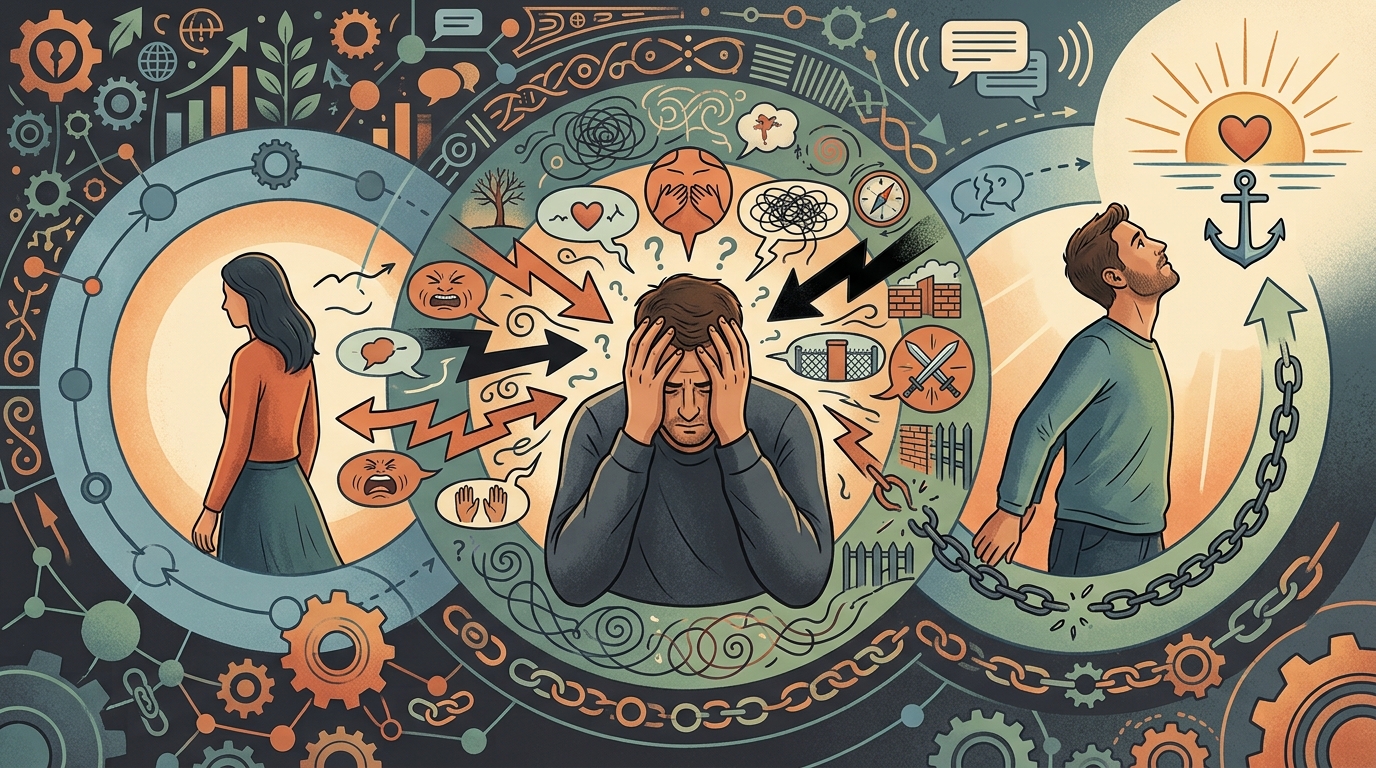
Explore relationship challenges, understand recurring emotional patterns, and learn how therapy can help you break unhealthy cycles and build healthier relationships.
Discover how families and couples in conflict can break destructive cycles, improve emotional connection, rebuild trust, and create healthier relationships through therapy.