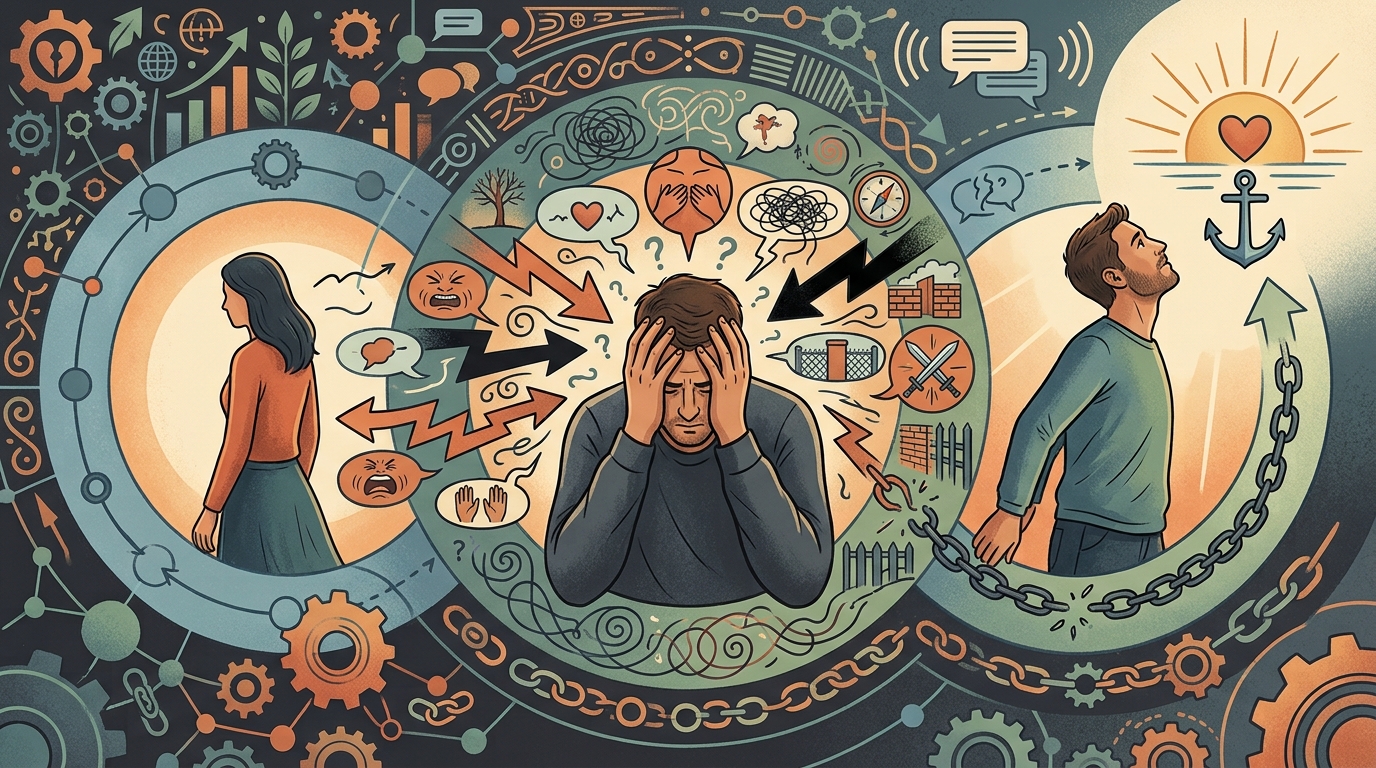
As a therapist and relationship coach for men, I often encounter individuals who are dealing with the long-lasting effects of an emotionally absent father. These wounds can shape your self-worth, influence your relationships, and manifest in ways that may surprise you. Understanding these patterns is the first step toward healing and building healthier connections. In this blog post, we will explore five common manifestations of these wounds and offer actionable insights to help you navigate your emotional patterns.
1۔ Unresolved Anger
The Roots of Anger
Do you find yourself quick to anger, even over minor issues? This response may stem from unexpressed pain and frustration rooted in your childhood. An emotionally absent father can leave a void that translates into unresolved anger, often directed at yourself or others.
Recognizing Triggers
To address this anger, it’s essential to recognize your triggers. Keep a journal to document instances when you feel anger rising. Ask yourself:
- What was happening at that moment?
- What emotions were you feeling?
- How did your childhood experiences influence your reaction?
Actionable Steps
- Practice Mindfulness: Engage in mindfulness techniques to stay present and observe your emotions without judgment. This can help you pause before reacting.
- Express Yourself: Find healthy outlets for your anger, such as physical exercise, creative pursuits, or talking to a trusted friend or therapist.
2۔ Controlling Tendencies
The Need for Control
If your childhood environment felt chaotic and out of control, you might develop controlling tendencies as a coping mechanism. This can manifest as rigid routines, perfectionism, or a need to micromanage situations and people.
Understanding the Impact
While seeking control can provide a sense of security, it can also lead to stress and strained relationships. Recognizing this pattern is crucial for personal growth.
Actionable Steps
- Challenge Perfectionism: Set realistic goals and allow yourself to make mistakes. Embrace the idea that imperfection is part of being human.
- Practice Flexibility: Introduce small changes to your routine. This can help you become more comfortable with uncertainty and spontaneity.
3۔ Fear of Deep Connection
The Cycle of Shallow Relationships
Are you stuck in a cycle of shallow relationships, seeking intimacy through sex but avoiding emotional vulnerability? This behavior often serves as a defense mechanism against the fear of being hurt again.
Identifying the Patterns
Understanding why you avoid deep connections is vital. Reflect on your past experiences and consider how they have shaped your approach to intimacy.
Actionable Steps
- Gradual Vulnerability: Start by sharing small, personal details with someone you trust. Gradually increase your level of vulnerability as you feel more comfortable.
- Therapeutic Support: Consider working with a therapist to explore your fears and develop strategies for building deeper connections.
4۔ People-Pleasing Patterns
The Quest for Approval
Do you find yourself giving more than you receive in relationships, constantly seeking approval and validation? This tendency may stem from a desire to please a father who was never satisfied, leading to a pattern of self-neglect.
Recognizing Your Worth
It’s essential to recognize that your worth is not contingent upon others’ approval. Learning to value yourself is a crucial step in breaking the cycle of people-pleasing.
Actionable Steps
- Set Boundaries: Practice saying no when necessary. Establishing clear boundaries can help you prioritize your needs and well-being.
- Self-Compassion: Engage in self-compassion exercises. Remind yourself that you are deserving of love and respect, regardless of others’ opinions.
5۔ Commitment Phobia
The Fear of Abandonment
If the idea of commitment triggers anxiety, it could be rooted in a fear of abandonment stemming from your childhood experiences. This fear can lead to avoidance of serious relationships or a tendency to sabotage them.
Understanding Commitment
Recognizing the difference between healthy commitment and unhealthy dependence is essential. Understanding your fears can help you navigate relationships more effectively.
Actionable Steps
- Reflect on Past Relationships: Consider how your past experiences have influenced your views on commitment. What patterns do you notice?
- Challenge Negative Thoughts: When you experience anxiety about commitment, take a step back and challenge the negative thoughts and beliefs that arise. Ask yourself if they are based on facts or irrational fears.
6۔ Difficulty with Emotional Expression
The Struggle to Share Feelings
Many men who grew up with emotionally absent fathers struggle to express their feelings. This difficulty can lead to misunderstandings in relationships and an inability to connect on a deeper emotional level.
Understanding Emotional Blocks
Recognizing that emotional expression is a vital part of healthy relationships is crucial. The inability to share feelings can create distance between you and your loved ones.
Actionable Steps
- Practice Emotional Literacy: Take time to identify and label your emotions. Use tools like emotion wheels to help articulate what you’re feeling.
- Create Safe Spaces: Find environments where you feel safe to express your emotions, whether it’s with a close friend, family member, or through journaling.
7۔ Low Self-Esteem
The Impact of Abandonment
An emotionally absent father can contribute to low self-esteem, leading you to doubt your worth and abilities. This can manifest in various aspects of life, from career choices to personal relationships.
Recognizing Your Value
Understanding that your self-worth is inherent and not defined by external validation is essential for personal growth.
Actionable Steps
- Affirmations: Create a list of positive affirmations that resonate with you. Repeat them daily to reinforce your self-worth.
- Celebrate Achievements: Take time to acknowledge and celebrate your accomplishments, no matter how small. This can help build a more positive self-image.
8۔ Fear of Conflict
Avoiding Confrontation
If you grew up in an environment where conflict was avoided or punished, you might develop a fear of confrontation. This can lead to suppressing your feelings and needs, resulting in resentment and frustration.
Understanding Conflict
Recognizing that conflict is a natural part of relationships can help you approach it with a healthier mindset.
Actionable Steps
- Reframe Conflict: View conflict as an opportunity for growth and understanding rather than a threat. This shift in perspective can make it easier to engage in difficult conversations.
- Practice Assertiveness: Develop assertiveness skills by expressing your thoughts and feelings respectfully. Start with low-stakes situations to build your confidence.
9۔ Difficulty Trusting Others
The Trust Barrier
If your father was emotionally absent, you may struggle with trusting others. This can lead to feelings of isolation and difficulty forming meaningful relationships.
Understanding Trust Issues
Recognizing that trust is a fundamental component of healthy relationships is essential. Your past experiences may have created a barrier that prevents you from fully opening up to others.
Actionable Steps
- Start Small: Begin by sharing minor personal details with someone you trust. Gradually increase the level of trust as you feel more comfortable.
- Reflect on Trust: Consider what trust means to you and identify any experiences that have shaped your views. Understanding these influences can help you work through your trust issues.
10۔ Avoidance of Responsibility
The Fear of Failure
An emotionally absent father can lead to a fear of failure, causing you to avoid taking responsibility in various aspects of life. This can manifest as procrastination or an unwillingness to commit to goals.
Understanding Responsibility
Recognizing that taking responsibility is a sign of maturity and growth is crucial. Avoiding responsibility can hinder your personal and professional development.
Actionable Steps
- Set Manageable Goals: Break larger tasks into smaller, manageable steps. This can help reduce feelings of overwhelm and make it easier to take action.
- Embrace Mistakes: Shift your perspective on failure. View mistakes as opportunities for learning and growth rather than as reflections of your worth.
Conclusion
Healing from the wounds of an emotionally absent father is a journey that requires self-awareness, patience, and compassion. By recognizing the manifestations of these wounds—unresolved anger, controlling tendencies, fear of deep connection, people-pleasing patterns, and commitment phobia—you can take actionable steps toward healing and building healthier relationships.
Remember, it’s never too late to rewrite your narrative and create the life and relationships you desire. Embrace the journey of self-discovery and growth, and know that support is available as you navigate this transformative process.