
Why You Keep Going Back to Sex Addiction Even When It’s Destroying You
You don’t want to want it anymore.
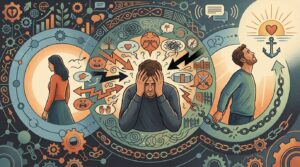
The compulsive hookups. The endless swiping. The risky decisions. The pornography sessions that last for hours. The promises you make to yourself afterward that this was the last time.
But then loneliness hits. Stress builds up.
You feel emotionally exhausted, disconnected, or overwhelmed.
And somehow, you find yourself back in the same cycle again.
Many men struggling with sex addiction or porn addiction describe this exact experience. They know the behavior is hurting their relationships, confidence, productivity, and mental health, yet they feel unable to stop. They are not simply dealing with strong sexual desire. They are dealing with a deeply reinforced pattern that has become a way of coping with emotions they don’t know how to process.
At its core, sex addiction is often not about sex.
It is about escape.
It is about a brain and nervous system searching for relief from loneliness, stress, rejection, shame, anxiety, or emotional pain. What begins as a source of pleasure can slowly become a coping mechanism. Eventually, the person is no longer choosing the behavior because it brings happiness. They are repeating it because their brain has learned to associate it with temporary relief.
This is why many men say, “I don’t even enjoy it anymore, but I still do it.”
Understanding Sex Addiction and Compulsive Sexual Behavior
The term sex addiction is commonly used to describe a pattern of compulsive sexual thoughts, urges, and behaviors that continue despite negative consequences. While researchers continue to debate terminology, the condition known as Compulsive Sexual Behavior Disorder (CSBD) is recognized in the World Health Organization’s ICD-11 as an impulse-control disorder.
CSBD is not defined by having a high sex drive. A person can have a healthy and active sex life without any disorder. The problem occurs when sexual behavior becomes difficult to control, takes priority over important areas of life, and continues despite causing distress or harm.
For some men, this appears as pornography addiction. For others, it may involve compulsive masturbation, constant use of dating apps, risky sexual behavior, affairs, or spending excessive amounts of time seeking sexual stimulation online.
The common thread is not the specific behavior.
The common thread is the loss of control.
How Porn and Sexual Stimulation Affect the Brain
Modern neuroscience helps explain why breaking this cycle can feel so difficult.
The brain’s reward system, especially the mesolimbic dopamine pathway, plays an important role in motivation, pleasure, and learning. Sexual activity naturally activates this system because reproduction is biologically important.
However, the modern world has created something human biology was never designed to handle: unlimited sexual novelty available instantly.
A person can now access thousands of new sexual images and videos within minutes. Each new piece of content creates anticipation and reward signals in the brain. Over time, repeated exposure to intense stimulation can change how the brain responds to reward.
Research on behavioral addictions suggests that repeated exposure to highly rewarding stimuli may contribute to tolerance, meaning a person needs more stimulation to achieve the same level of satisfaction.
This is why some people find themselves moving toward more extreme content, spending longer periods online, or constantly searching for something new.
The issue is not simply a lack of discipline.
The brain has learned a pattern.
The good news is that the brain is also capable of change.
Through neuroplasticity, healthier habits, emotional regulation skills, and new experiences of connection, the brain can gradually build different pathways.
Why Men Become Trapped in the Cycle
Sexual behavior often becomes a way of regulating emotions.
A man may not be seeking sex because he is feeling confident and fulfilled. He may be seeking it because he feels rejected, lonely, stressed, angry, bored, or disconnected from himself.
Many men who struggle with compulsive sexual behavior also carry deeper emotional wounds. These can come from experiences of neglect, shame, insecurity, relationship difficulties, or feeling unseen and unwanted.
The sexual behavior becomes a temporary escape from these feelings.
But the relief does not last.
Afterward comes guilt, disappointment, secrecy, and self-criticism, which creates more emotional pain. That pain then triggers the desire to escape again.
This is how the cycle continues.
Why Willpower Alone Usually Does Not Fix Sex and Porn Addiction
Many men approach porn addiction by trying to force themselves to stop.
They delete apps, block websites, and promise themselves that they will never do it again.
These strategies can help, but they often fail when the deeper emotional and neurological patterns remain unchanged.
Recovery is not only about removing a behavior. It is about understanding why the behavior became necessary in the first place.
Evidence-based therapies such as Cognitive Behavioral Therapy (CBT) help people identify triggers, challenge unhealthy thought patterns, and build healthier responses to urges. Dialectical Behavior Therapy (DBT) focuses on emotional regulation and distress tolerance, helping people experience uncomfortable emotions without immediately escaping them.
Other therapeutic approaches focus on attachment wounds, trauma processing, and nervous system regulation because many compulsive behaviors are connected to unresolved emotional experiences.
Healing happens when a person learns how to meet their emotional needs in healthier ways.
What Life Looks Like After Recovering From Sex Addiction
Recovery is not about becoming someone who has no sexual desire.
It is about becoming someone who is no longer controlled by their impulses.
Many men experience a significant improvement in their relationships because they are finally able to connect emotionally instead of using sex as an escape. They begin experiencing intimacy, trust, and vulnerability without the shame that previously surrounded their sexuality.
They also regain mental energy. The hours spent hiding behaviors, chasing stimulation, or recovering from emotional crashes become available for personal growth, career goals, family, and meaningful relationships.
Most importantly, they rebuild their relationship with themselves.
They stop seeing themselves as broken or powerless.
They understand their brain, their emotions, and their patterns.
And they learn that change is possible.
Sex addiction, porn addiction, and compulsive sexual behavior are not simply problems of desire. They are often signs of a deeper struggle with emotional regulation, connection, and self-worth.
The path forward is not shame. It is understanding.
With the right support, the brain can heal, relationships can be repaired, and a person can build a life where they no longer need destructive patterns to feel okay.
How MMHI Helps Men Recover Sex or Porn Addiction
MMHI provides structured, private, and judgment-free therapy for men dealing with compulsive sexual behavior, sex addition, porn addiction, emotional burnout, anxiety, and identity-related struggles.
Unlike general advice or self-help content, therapy focuses on real-time emotional patterns, triggers, and behavioral loops that keep the cycle active. Working with a trained therapist helps you understand not just what you are doing, but why you are doing it, and how to interrupt it effectively.
This process often brings clarity faster than trying to manage it alone because it provides direct feedback, structured accountability, and a safe space to unpack underlying emotional drivers without judgment.
If you are ready to take control of the pattern instead of being controlled by it, booking a confidential session with MMHI is a first step toward breaking the cycle and rebuilding stability in your emotional and behavioral life.