family relationships

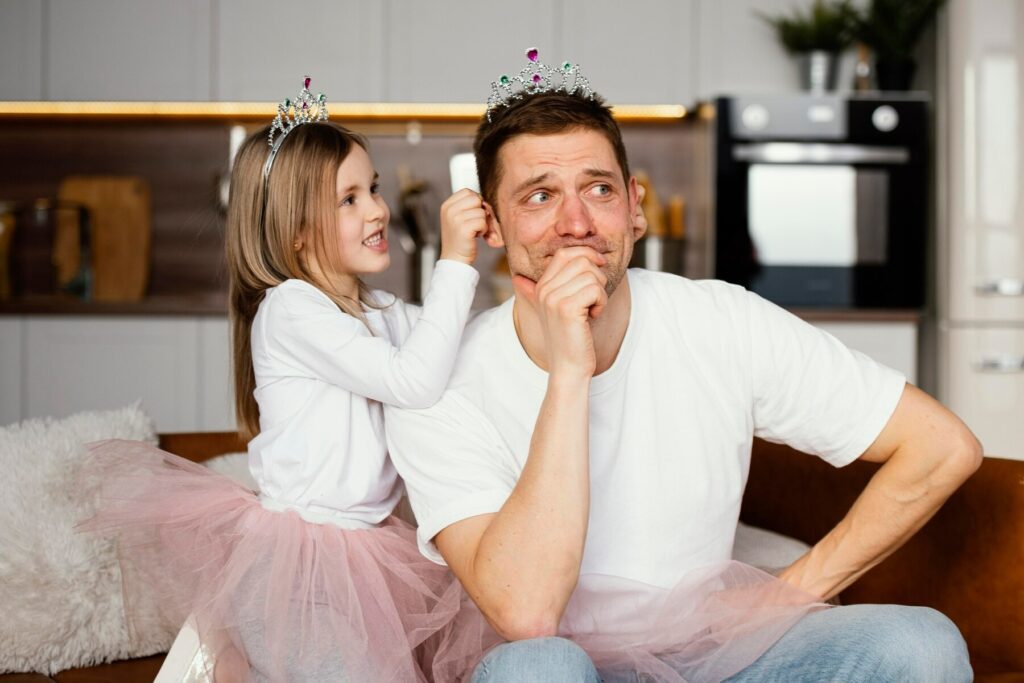
Father and child sharing a bonding moment, emphasizing the importance of emotional well-being in men’s mental health.
Divorce, Fatherhood & Rebuilding

Better Father After Divorce

Fatherhood After Divorce: Navigating Complex Emotions and Behavioral Patterns Divorce is a seismic event, shaking the foundation of your family and identity, especially as a father. The feelings of loss, guilt, frustration, and uncertainty you face aren’t just emotional, they are rooted in deep brain processes and evolutionary mechanisms. Neuroscience shows that chronic stress, like the emotional upheaval following divorce, activates the amygdala (the brain’s threat center), impairing the prefrontal cortex responsible for decision-making, emotional regulation, and empathy. This means when you feel overwhelmed, your ability to be emotionally present with your children can be compromised. From an evolutionary psychology perspective, men’s roles as fathers have historically been tied to protection, provision, and emotional support. Although roles have evolved culturally, the mammalian brain still seeks attachment and social bonds. Secure father-child attachment supports not only child development but men’s own emotional well-being. Social psychology highlights how social expectations and stereotypes, like the “absent father” myth, can pressure men to suppress vulnerability or overcompensate through hyperwork or control. These cultural pressures can interfere with authentic connection and contribute to feelings of isolation. Human behavior standards emphasize that consistent, emotionally attuned presence trumps perfection. Children need safety, predictability, and responsiveness, not flawless fathers. However, the mental health system often under-serves divorced fathers, focusing more on mothers or pathologizing men’s emotional expression, which can leave fathers feeling misunderstood and unsupported. Therapeutic Strategies to Rebuild Fatherhood Attachment-Based Therapy Focuses on healing disrupted bonds by strengthening emotional attunement and secure attachment patterns. This therapy taps into the brain’s neuroplasticity, promoting new, healthier relational pathways. Mindfulness and Emotion Regulation (DBT techniques) Help fathers manage amygdala-driven reactivity and strengthen prefrontal cortex function, improving emotional presence and patience with children. Solution-Focused Therapy Helps fathers identify actionable steps and build routines that create consistent positive interactions, fostering trust and safety. Social Support Groups Provide validation and shared experiences, reducing social isolation and reshaping beliefs around masculinity and fatherhood. What You Can Gain by Embracing Growth as a Father After Divorce Mentally, healing your brain’s emotional circuits enhances resilience, self-awareness, and emotional regulation. In your relationship with your children, consistent nurturing presence rebuilds trust and deepens emotional bonds. Socially, you model healthy masculinity, showing vulnerability alongside strength, breaking generational trauma cycles. Professionally and personally, emotional stability supports clearer decision-making, productivity, and meaningful connections. Divorce may disrupt family structure, but it doesn’t have to fracture fatherhood. Grounded in neuroscience and behavioral science, therapeutic support empowers you to rebuild, thrive, and create the father-child relationship you desire and deserve.

Couple in a serious discussion, representing the importance of communication and mental health awareness in relationships
Identity & Direction

Family vs. Risks

The Unspoken Fear Behind the Dream Many men carry a quiet but powerful longing: to build a family, to create something that outlives them, to come home to love that isn’t conditional on success or performance. But for many, that desire is tangled up with fear, fear of betrayal, of financial devastation, of being used, erased, or abandoned after giving everything. It’s a fear you rarely say out loud. Because saying “I want love, but I don’t want to lose myself in the process” makes you sound paranoid or jaded. But it’s not paranoia. It’s lived experience for you or for men you’ve watched lose custody, identity, or dignity in the aftermath of failed relationships or high-conflict divorces. From an evolutionary psychology perspective, men are wired to invest when they feel security and legacy. But when commitment becomes a gamble with no clear payoff, especially in a culture where masculinity is scrutinized and male vulnerability is minimized, the instinct to protect one’s self and assets kicks in harder than the instinct to connect. Socially, men are told to “man up,” commit, be providers. But they’re also constantly warned: “Be careful, she could take half, you’ll lose the kids, she’ll change once she gets the ring.” And when men express this internal conflict, they’re either labeled as emotionally unavailable or accused of being commitment-phobic. As therapists, we see beneath that label. This isn’t just fear, it’s grief. It’s the grief of watching other men lose their sense of identity in pursuit of love. It’s the pain of carrying generations of emotional repression, while being asked to give everything—time, money, heart—with little room for male emotional needs to be honored in return. The mental health industry, with its over-focus on female-centric emotional language and its quick pathologizing of male fear, often misses the nuance. A man questioning the cost of marriage isn’t broken, he’s discerning. Therapeutic Strategies for Resolving This Inner Conflict Therapy doesn’t push you toward or away from commitment. It helps you know yourself deeply enough to choose love consciously, not from fear or fantasy. We begin by identifying the core fear behind the hesitation. Is it fear of betrayal? Of legal or financial loss? Of being unseen in the relationship? Often, it’s not just one, it’s a stack of fears rooted in real-world observations and personal history. We use cognitive behavioral techniques to unpack what beliefs you’ve inherited, about relationships, masculinity, and worth. Who taught you that marriage means losing power? Who modeled that love equals sacrifice without reciprocity? From there, boundary work is critical. Many men never learned how to set emotional, financial, or relational boundaries in ways that honor both love and self-respect. You can be open-hearted and still guarded with your legacy. Therapy helps you build frameworks where love doesn’t require blind surrender. We also work with the mammalian brain, the part that seeks safety, attachment, and trust. When you’ve witnessed or experienced betrayal, your body holds that memory. We integrate somatic and solution-focused modalities to help rewire what safety in a relationship feels like, so your nervous system stops treating intimacy as a threat. And then, we challenge perfectionism. Often the fear isn’t just loss, it’s the belief that you wouldn’t recover if that loss happened. Therapy helps you build resilience, not false certainty that you’ll never get hurt, but the truth that even if you do, you won’t be destroyed by it. What Life Looks Like After Resolving the Fear When a man works through the tension between love and loss, he becomes clearer, not colder. He learns that real strength is measured not by how much he avoids connection, but by how well he protects himself while connecting.

Scroll to Top